99.99%

Accuracy SLA

75%

Faster Recovery

53%

3 Year ROI

1,500+

Deployments

80+

Countries

What data to restore

Stop Guessing. Know with
Certainty What Data is Clean.

Most scanning tools catch obvious corruption. They miss the subtle, stealth changes hidden inside files and databases — the kind modern ransomware is specifically designed to hide.

Surface-level tools miss the threat

Firewalls, endpoint protection, and immutable backups all play a role. None of them answer the question that matters most: is this data actually clean?

Recovery becomes a crisis, not a process

Without validated integrity, teams restore from blind faith — risking reinfection, extended downtime, and failed audits. A completed backup is not the same as a clean one.

Key Capabilities

Clean or Corrupt. Know Before You Restore.
  • 01 Validate
  • 02 Detect
  • 03 Respond
  • 04 Recover

01 Validate

Content-Based Data Integrity Analysis: Inspects the actual content of files and databases, analyzing 200+ statistics at the byte level across production databases, file systems, and VM data stores.

Seamless Integration: Adds a critical layer of data integrity validation to existing data protection workflows in both primary and backup environments.
CyberSense validation

02 Detect

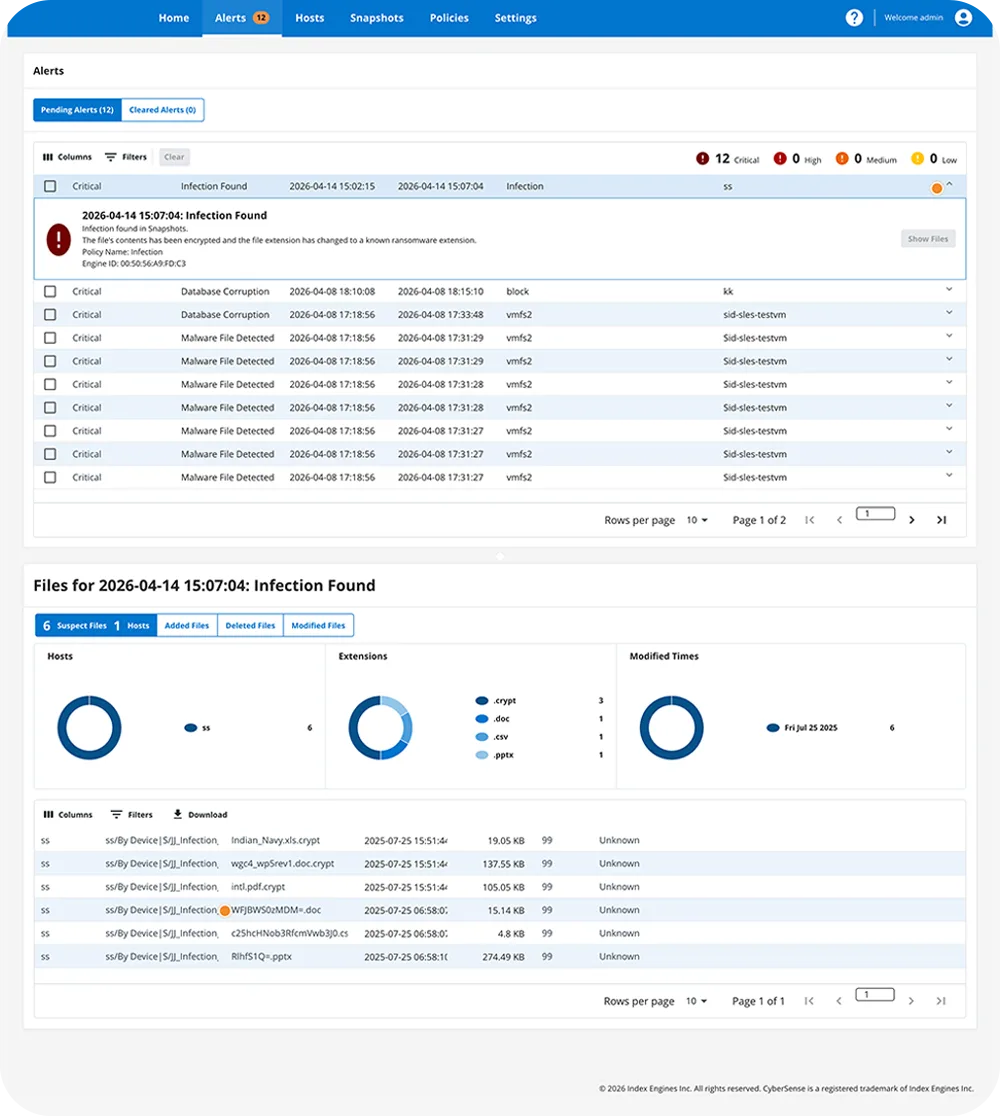
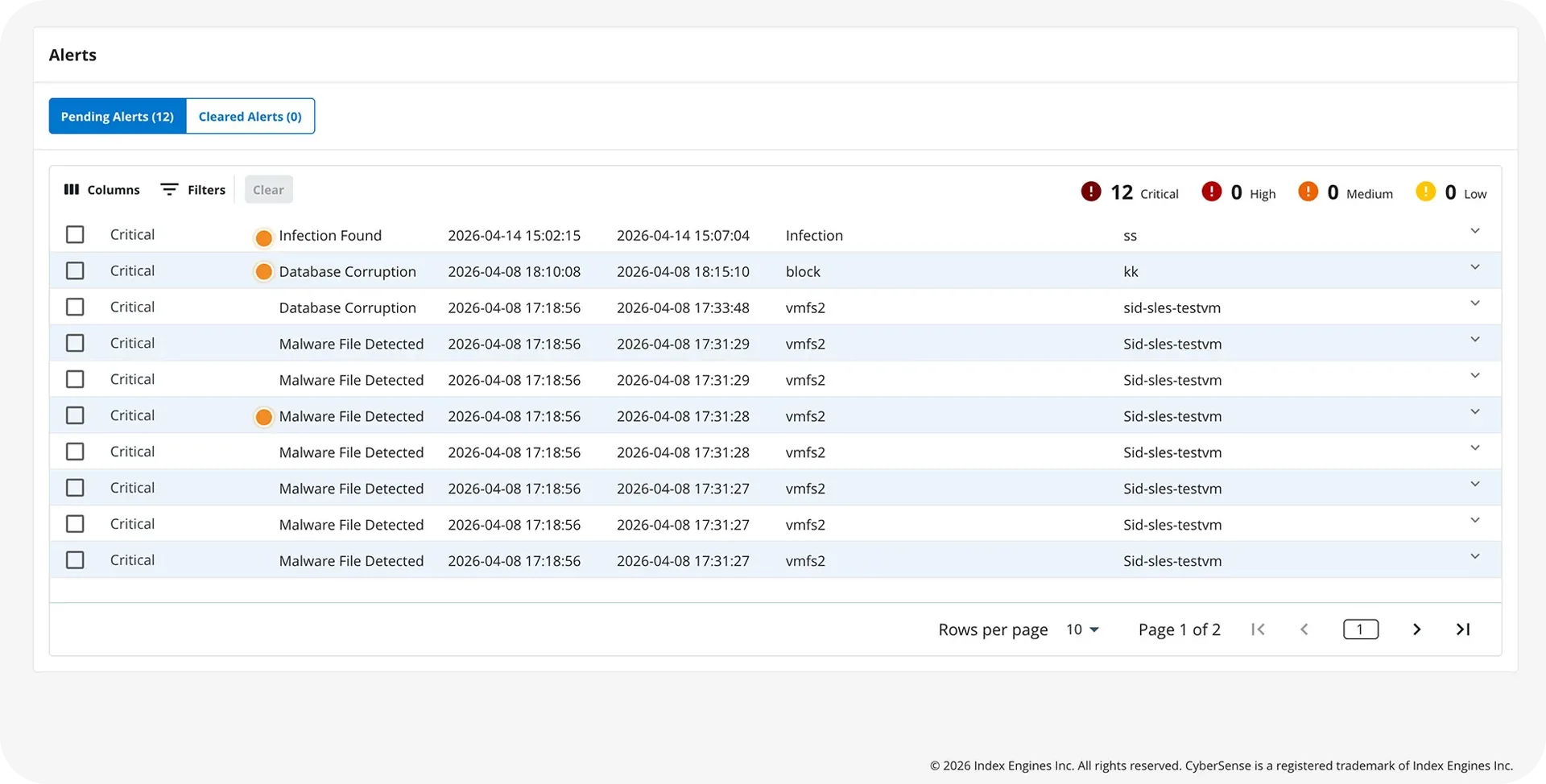
99.99% Accuracy: Detects partial encryption, hidden header corruption, and slow-acting ransomware that surface-level tools miss.

Custom YARA Rules: Built and maintained by Index Engines, designed from observations in the CyberSense Research Lab to catch advanced threats.

Malware Signature Scanning: Supports custom MD5 signatures for forward and backward detection across historical and future backups.

Threshold Monitoring: Configurable severity alerts for unusual data behavior even outside of an active attack including internal bad actors.
CyberSense detection

03 Respond

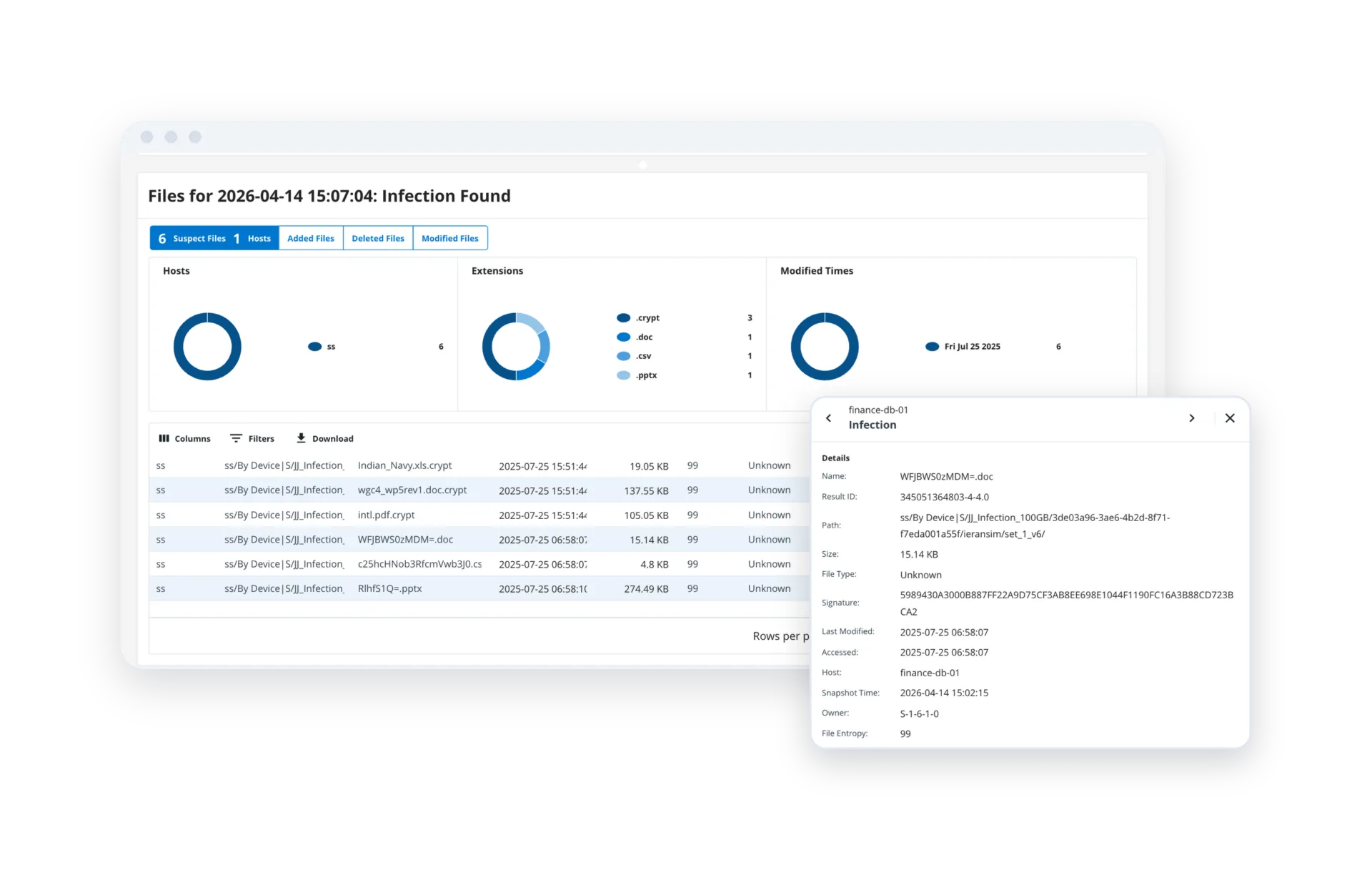
Deep Forensic Analysis: Identifies the attack type, blast radius, and corruption timeline to accelerate investigation and root cause analysis.

SIEM/SOAR Integration: Delivers alerts and forensic telemetry via dashboard, email, and syslog into existing security workflows.
04 Recover

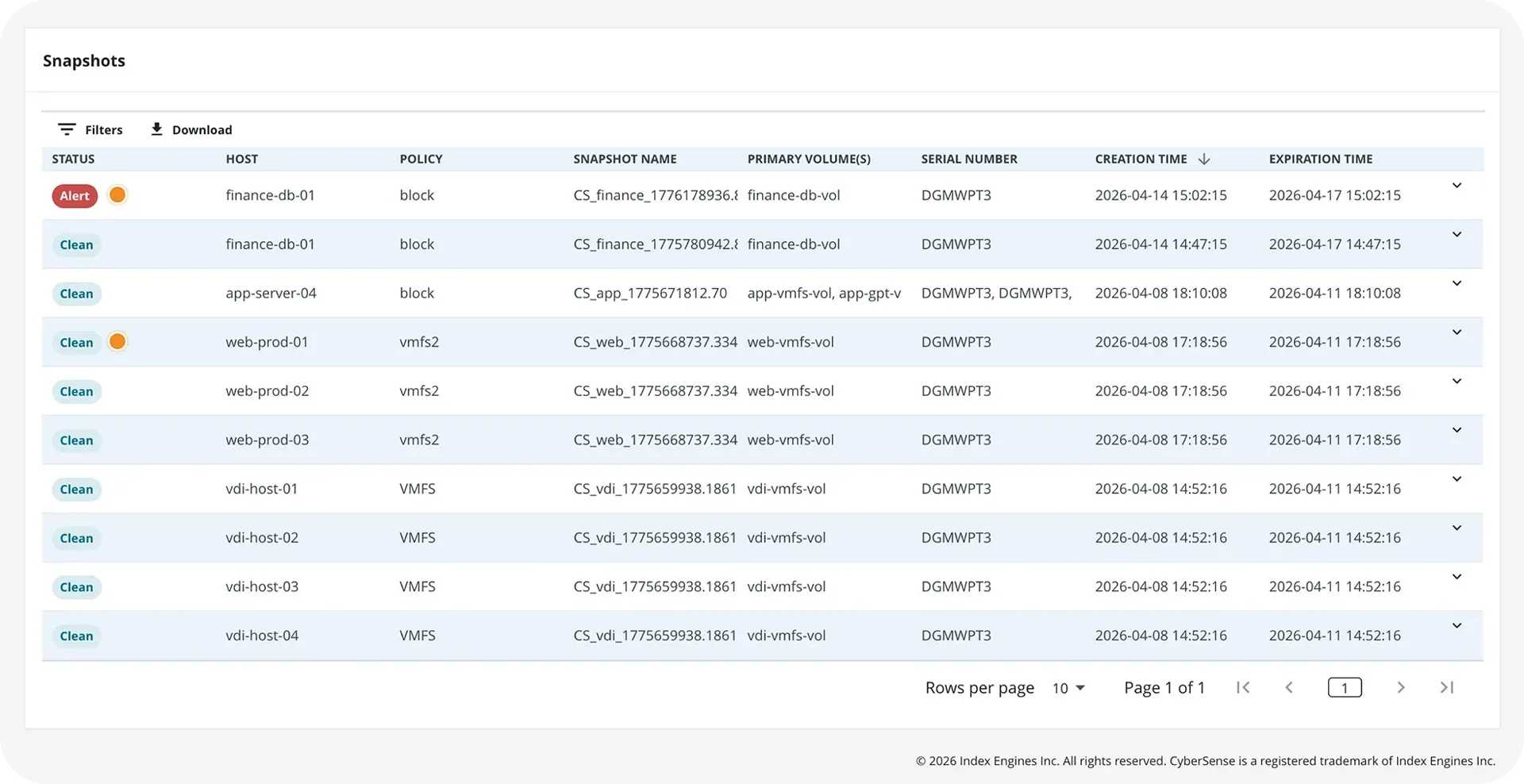
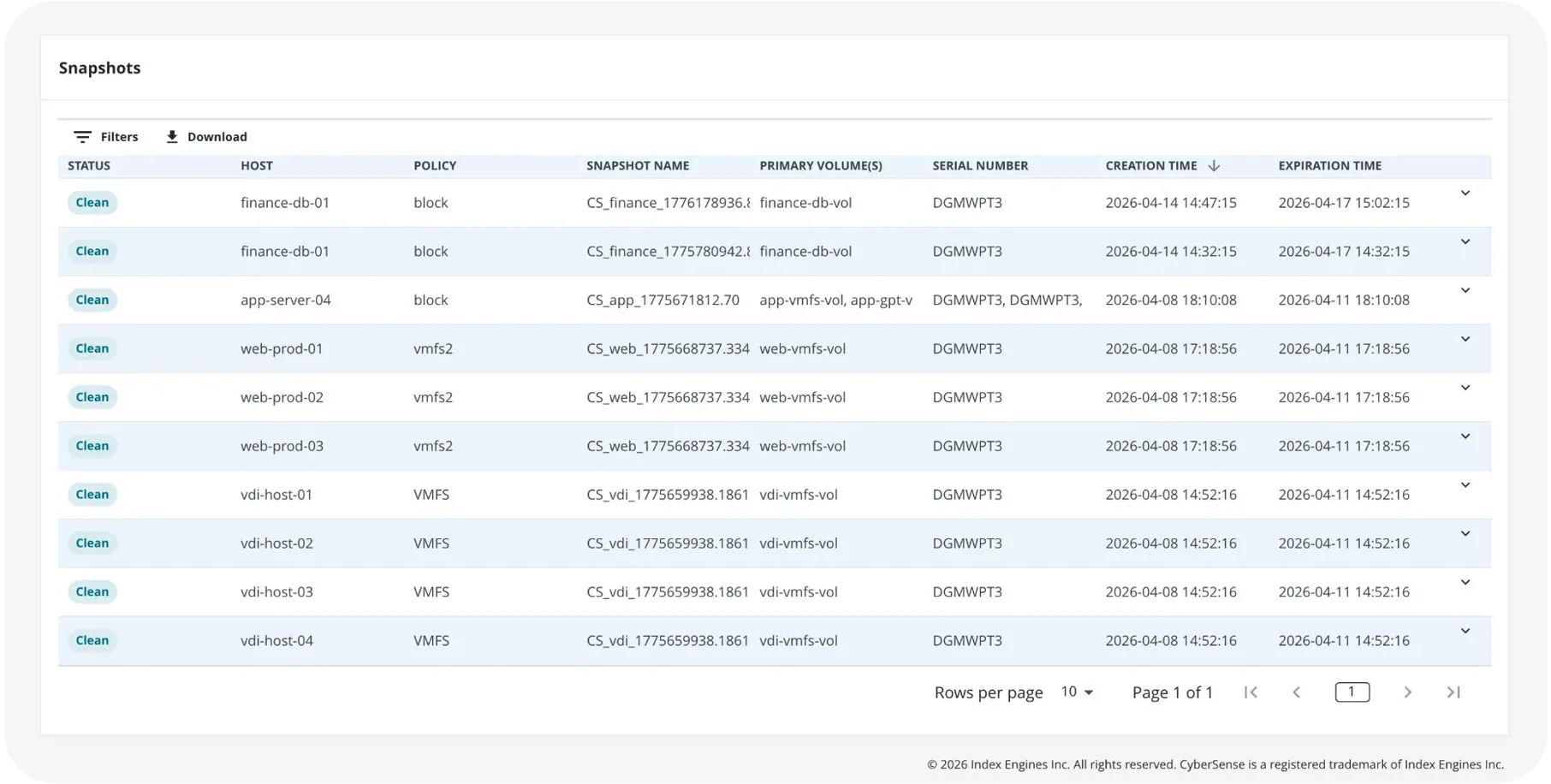
Last Known Clean Data: Pinpoints the last verified clean backup or snapshot, giving recovery teams a trusted restore point.

Confident Recovery: Validates data integrity before restore, eliminating the risk of reinfection and returning clean data to production fast.
CyberSense recovery

Cross-Team Value

Security Teams
Forensic-quality alerts and full attack telemetry delivered into existing SIEM and SOAR workflows. Less noise. Faster response.

IT and Infrastructure
A completed backup is not the same as a clean one. Verified recovery points mean teams act with certainty, not hope.

Compliance and Risk
A continuous, auditable integrity record aligned to NIST CSF and NIST SP 800-209 — built-in evidence for auditors and insurance requirements.

Executives
75% faster recovery. 80% less restoration effort. 53% ROI over three years, independently validated.


Business Outcomes

75%

Faster recovery time

FORRESTER TEI

80%

Less restoration effort required

FORRESTER TEI

53%

ROI over three years

FORRESTER TEI

99.99%

Detection accuracy SLA

ESG VALIDATED

Featured Content

Latest Insights on Cyber Resilience.

Research, reports, and though leadership from Index Engines and the industry’s leading analysts.

Frequently Asked Questions

What does Index Engines CyberSense do?

CyberSense is a cyber resilience technology from Index Engines that helps organizations identify clean, trusted data after a ransomware attack. Using AI trained on real-world ransomware variants, CyberSense detects data corruption in backups and snapshots with 99.99% accuracy, helping organizations recover confidently and avoid restoring compromised data.

How does CyberSense help with ransomware recovery?

CyberSense analyzes data to identify corruption caused by ransomware and proactively pinpoints the last known clean recovery point. This enables IT teams to restore trusted data quickly, reduce downtime, and prevent reinfection from compromised backups.

How is CyberSense different from traditional ransomware detection tools?

Unlike traditional tools that rely on metadata analysis, behavioral thresholds, or known threat signatures, CyberSense analyzes actual file and database content at the byte level. This deeper inspection allows it to detect sophisticated ransomware techniques such as partial encryption, byte substitution, and hidden malware that other solutions may miss.

How does CyberSense detect ransomware?

CyberSense examines data at the byte level using more than 200 content-based analytics and AI models trained on over 7,500 ransomware variants and 120 million real-world data samples. It identifies encryption, corruption, mass deletion, header manipulation, and other indicators of ransomware activity.

What happens when CyberSense detects corruption?

When suspicious activity is identified, CyberSense generates automated alerts and forensic reports that show what data was affected, when the attack began, and which recovery point remains clean. This allows recovery teams to make informed restoration decisions quickly.

Who uses CyberSense?

CyberSense is used by more than 1,800 organizations worldwide across financial services, healthcare, government, energy, telecommunications, and technology sectors. It is typically deployed by enterprises focused on cyber resilience, business continuity, and ransomware recovery preparedness.

Does CyberSense integrate with existing storage environments?

Yes. CyberSense integrates with leading enterprise backup and storage platforms, including Dell, IBM, Hitachi Vantara, and Infinidat, allowing organizations to strengthen cyber resilience without replacing existing infrastructure.

Can CyberSense help meet compliance and cyber insurance requirements?

Yes. CyberSense supports alignment with the NIST Cybersecurity Framework across Detect, Respond, and Recover functions and helps organizations demonstrate recovery readiness and data integrity for regulatory and cyber insurance requirements.

Why is identifying clean data important after a ransomware attack?

Ransomware often corrupts data long before an attack is discovered. Without a reliable way to identify trusted recovery points, organizations risk restoring infected or corrupted data and extending downtime. CyberSense eliminates this uncertainty by validating data integrity before recovery begins.

Who Are CyberSense’s Competitors?

CyberSense does not fit neatly into a traditional competitive category because it is not a backup solution, storage platform, endpoint security product, or ransomware prevention tool. Instead, CyberSense adds a critical layer of cyber resilience and recovery assurance to existing security, backup, and storage investments. While organizations may evaluate CyberSense alongside data protection, ransomware detection, or cyber recovery solutions, CyberSense complements these technologies rather than replacing them. Its purpose is to validate the integrity of data after a cyberattack and help organizations recover with confidence. What sets CyberSense apart is its unique combination of AI trained on thousands of real ransomware variants, deep byte-level content analysis, forensic-level reporting and analytics, and a 99.99% accuracy SLA
bottom
CyberSense Video